C.O.N.F.L.I.C.T

Image result for conflict thirkell

Robert Thirkell’s book, “C.O.N.F.L.I.C.T”, focuses on eight key areas on making characters and story-lines feel both genuine and interesting. From both on-screen details, such as characterisation and conceptualisation to off-screen details like the well-being of the actors and the crew around them. Thirkell goes into detail and provides examples and experiences that he has been through, providing  readers, like myself, some ideas on how to approach issues that may arise, and methods that could help people who are in this problem, find solutions that can make pre-production, production and post-production go slightly smoother.

Often within his story structure, Thirkell has “stolen from what has worked from the beginning of time, the storytelling of folk lore and legend, the Greeks, Shakespeare and Hans Christian Andersen” (Thirkell, p. 33, 2010). He uses inspiration from previous sources to form a basic, yet effective structure for stories which help express reason and motivation for having characters do certain things. This is useful for both up and coming writers and experienced writers, as they are able to use a basic structure and stick to a story that can be either simple or complicated.

Later on within Thirkell’s book, he references that within the “five dimensions of film-making on location, you should always, and through all of them, try to adhere to the larger truths you have researched. You need to use the five dimensions to tell a story people will watch, but you also need to make moral judgements, which is why this fifth dimension is the bedrock of filming” (Thirkell, p. 102, 2010). This provides a backbone within programming as a whole, because it enables writers and show makers to create engaging entertainment or factual programmes that are interesting and make sense to audiences who may be unaware of the going-ons within the topics that are being broadcast in the content.

  • Thirkell, R. (2010). CONFLICT. London: Methuen Drama.

———————————–

Line of Duty: Semester Two – Week Three

Image result for Line of Duty

Full Episode: https://learningonscreen.ac.uk/ondemand/index.php/prog/02B0ED9B?bcast=87535868

The BBC Two Police Drama “Line of Duty” is a series created by Jed Mercurio. Unlike most types of drama which focus on one single character or remain focused on a group of established characters, this police drama alters which character  is in ‘front and centre of their investigation, with Lennie James’ DCI Tony Gates leading series one, followed by perennial scene-stealer Keeley Hawes as DI Lindsay Denton. Then later, Daniel Mays as Sergeant Danny Waldron.’ (Stolworthy, 2017, The Independent). This means new watchers don’t have to feel as out of the loop as most conventional dramas do with having new characters guide the way.

Line of Duty was created to be different as the creator, Mercurcio appears to be ‘so meticulous, yet much of his plotting is done on the hoof. This is because he does what’s right for each episode.’ (Wilson, 2016, Telegraph). By doing this, each episode has more mystery and kept the episodes under wraps and out of public eye and remained a surprise, like most of the best dramas tend to follow.

The characters within Line of Duty are realistic in handling situations on the fly, but by also overlooking the expectations audiences have of what police offers genuinely do, it becomes a case of surrealism. This surrealism is what makes the drama so enticing and thrilling to watch because it ignores the boring side we know, and focuses on action that ensures audiences are engaged.

References

The Archers: Semester Two – Week Three.

Image result for The Archers

Full Episode: https://learningonscreen.ac.uk/ondemand/index.php/prog/050A8207?bcast=97848842

The Archers is a BBC Radio 4 drama that has been going for approximately 70 years. The series centres on the Archers family and other families such as the Grundy family and their lives within a middle-class area. Broadcasting on BBC Radio 4 for about 12 minutes, the various storylines are impacted by reality in terms of length of illnesses and varying relationships between step-parents and step-children, but also shows the harsh truths of both.

A prime example of this happening was just recent, as a storyline mirrored the real-life fatal consequences of a condition called Sepsis, it meant that ‘listeners were left shocked as mother-of-three Nic Grundy died of sepsis at the age of 37’ (Harley, 2018, The Telegraph). This enlightenment of a condition using just audio caused the charity related to Sepsis to gain money, a rarity to occur from Drama which mainly ignores the ‘boring’ side of life, as awareness is often ignored in soap drama.

Although the drama tends to get semi-realistic due to ‘a couple of misfortunes are never enough to sate the audience’s appetite’ (Errington, 2015, Boodle Hatfield), the series works well because of how it forms a version of escapism for listeners and use their imagination to think about the situation these characters are fictionalised into.

References

Calling Up Possible Contributors: Semester 2 – Week Two.

Image result for the birdcage manchester

This week I looked into possible contributors to find stories I could use for a Drag Queens and Kings drama for radio. I first had a plan to look through various different shows that involve about Drag Queens and Kings to see if I can find anyone to pull up for about asking for their story to be told in a form of radio drama.

Whilst I couldn’t necessarily find any phone numbers for independent Drag Queens or Kings, there was one company that kept coming up in my research for possible contributors, that being The Birdcage. This company is located nearby the Manchester Arndale, and open three nights a week. Each night they’re open (Wednesday, Friday and Saturday), there are different events, but the one that was most tailored to my idea is the Wednesday night event involving Drag throughout the last four decades. This meant that there was a variety of routes I can do down in terms of when the drama can be set.

Drag Queens and Kings are often freelanced into The Birdcage, though some are resident performers and whilst I was unable to speak to one directly, I was given ideas about how confident they were depending on experience, and how sometimes even veteran performers got a little shaky. This proved valuable, and as such, when planning out scripts and characters, having a variety of experience within characters and how this plays into their confidence is key.

Despite being nervous, I did find this experience alright though in future, I feel I need to work on how excited I sounded on the phone as I felt my nerves made me feel anxious and when it was successful, the relief did get to me a bit too much, but it’s something I know I can work on in future.

A Mix-Tape for Gus: Semester 2 – Week One.

Full Episode: http://www.bbc.co.uk/programmes/b04kbjhs

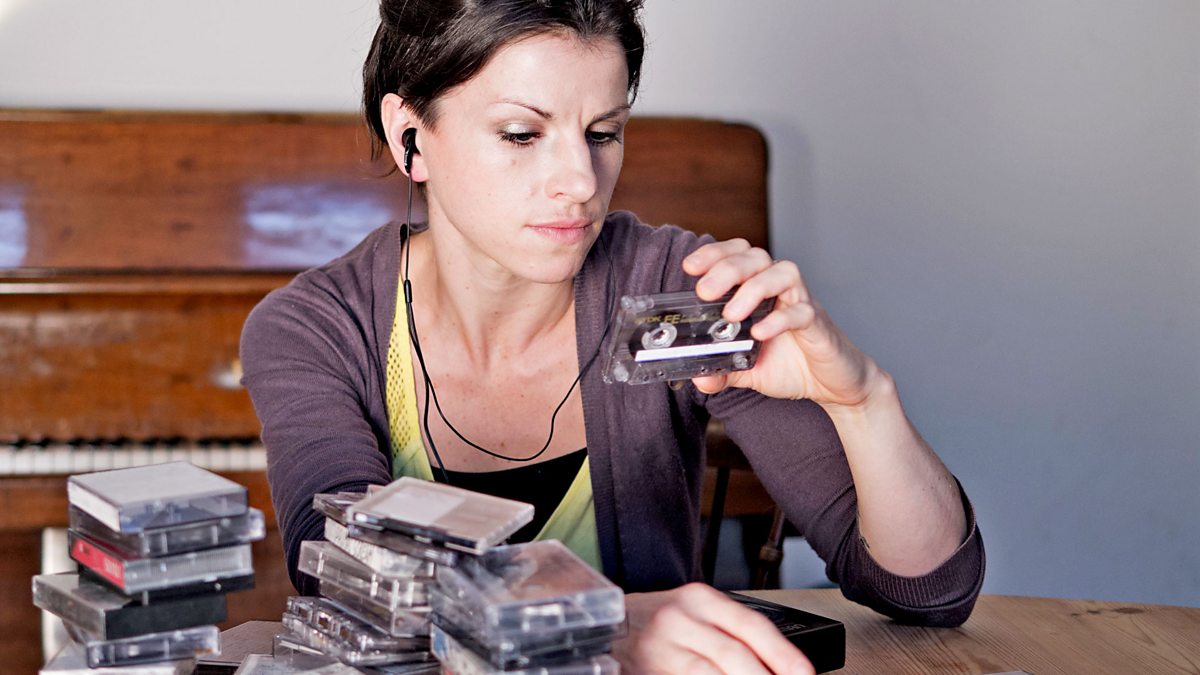
A Mix-Tape for Gus is a BBC Radio 4 documentary produced by Emily Levy. The 30-minute documentary focuses on how Levy and her brother, Gus, used to make mixtapes for each other and exchange them with each other. Created posthumously for her brother, Levy states that it was created to show “how much this legacy has influenced and inspired me  – and continues to do so” (Levy, Emly Levy Blog, 2014). The documentary focuses on music that was personal to Levy and her brother, which makes it feel personal and created with care to honour her deceased brother.

This documentary focuses on the unconditional love Emily has for her brother, as she continues to create these mixtapes that were inspired by her late brothers’ works. She uses these tapes to not only learn more about her brother – but to also help her move on from his accidental death, and the final quote “it’s like it leaves a paper-trail through lives and relationships of songs and lyrics and beats” acts like a comparison to her brother’s “essence – his lust for life, his open-mindedness and creativity” (Pickett, Getintothis, 2016) and how she remembers him through her mix-tapes she made for him and the mix-tapes he made for her since childhood.

It works for BBC Radio 4 as it fits under its main purpose of providing “intelligent programmes in many genres which inform, educate and entertain” (BBC, 2018). By fitting this, the documentary is able to express a unique story of how music can influence and honour the memory of a loved one, and the documentary creates a personal vibe that listeners like myself can hear throughout and almost pay our own respects to Gus through Levy’s words.

References

The Man Who Squeezes Muscles: Semester 2 – Week One.

Image result for the man who squeezes muscles

Full Episode: https://www.bbc.co.uk/iplayer/episode/p0472z6v/the-man-who-squeezes-muscles-searching-for-purple-aki

The Man Who Squeezes Muscles is a one-off documentary on BBC Three based on Akinwale Arobieke, dubbed as Purple Aki. Throughout the seventeen minutes, the episode focuses on two testimonies of three of his victims – one being told by the actual victim, one being told by their sister and the other by his ex-girlfriend. Evident throughout the seventeen minutes was the referencing to how detailed Arobieke was in the research carried out into ‘the lives of those he targeted, as well as his persistence’ (Kelly, BBC, 2016), showing just how deep he has affected the lives of both those who testified in person and for others, as well as others who are victims but kept anonymous.

BBC Three uses shots of local areas within the North West during the interviews to show how personal the attacks felt to the innocent victims. Furthermore, these shots show just how infamous Arobieke became as he is has “become a modern-day bogeyman and an internet sensation” (The Bolton News, 2016). This use of showing location and having their tales speak over the locations provides a sense of reality to the documentary, making it more heartfelt and allow audiences to sympathise with them.

The use of different people telling stories that are intertwined with each other makes the character of the Purple Aki feel ominous and negative with both the use of long, wide shots of locations found within the towns and cities shown on the screen. This effect makes the documentary feel cold and real, which I found interesting and in the space of just over a quarter of an hour, it felt rightfully paced and not dragged on or rushed like some documentaries within fifteen to twenty minutes do sometimes.

References

Quake – Week Six.

Image result for Quake BBC Radio 4

Full Series: http://www.bbc.co.uk/programmes/p052lph7/episodes/downloads

The BBC Radio 4 and Virtual Reality (VR) Drama series “Quake” is a 12-part, almost non-linear series where the first episode instructs you to listen to Episode 1 and Episode 12 first and last respectfully, and the other ten in any order you please. Each episode varies in length from eight to twelve minutes, and each episode focuses on a different topic that has links with past and future episodes, depending on the order people listen them to.

For the first episode, “The Trapped Man” was also translated into VR, allowing audiences to experience first hand the sensations that are told within the nine-minute narrative. In the experience, they watch the drama unfold through the eyes of the main character, Rafi, as a building collapses around him (BDH, 2017). This experience is something new for audiences, as normally radio dramas and shows as a whole allow listeners to create the mental images. Whilst this shows the images and doesn’t just take away the imagination, but it instead replaces it with emotional thoughts and how to react to the situation Rafi finds himself in.

The series is designed as something that listeners can fit into whatever space they may have available in the day, choosing episodes to suit, or listening to the whole thing as a podcast (Graham, VRFocus, 2017). By being designed this way, it engages more listeners as they can listen to it when they please, and not feel out of the loop by not listening to an episode that day.

Radio 4 presents itself as a mixed speech service. It offers both in-depth news and current affairs and a wide range of other speech output. This includes drama, readings, comedy, factual and magazine programmes (BBC Radio Information, 2017). This series fits in with the drama aspect, as well as being in-depth in terms of expressing the storyline in a unique way with ten parts that can be played in any order the listener feels appropriate, making this series unique and interesting.

References

Taboo – Week Six.

Related image

Full Episode: https://learningonscreen.ac.uk/ondemand/index.php/prog/0E225656?bcast=123651023

The BBC One and FX Drama “Taboo” is a British period drama series that focuses on James Keziah Delaney, a man returning to England from Africa to take over a business owned by his father. The series was created by Steven Knight with Tom Hardy and Chips Hardy and partnered up with FX (Hughes, The Guardian, 2017) to deliver an eight-part 60 minute first series that aired in January of 2017, around the debut of the fourth series of “Sherlock” and the one-off docudrama “Murdered by my Boyfriend” (BBC Media Centre, 2017).

Set in the early 19th Century in London, it follows the protagonist in his journey to navigate through the various forms of conspiracy and is faced with murder and betrayal, telling a dark family mystery unfolds in a combustible tale of love and treachery (BBC Media Centre, 2017). The plot of Taboo’s first series walks a fine line between compelling and ludicrous, falling on the right side only because of sterling support and the sheer exuberance with which the story unfolds. (Hughes, The Guardian, 2017).

Within the opening episode, we are shown Delaney’s return to England to attend his father’s funeral in 1812. He is the heir to the ownership of the Shipping Company his father once owned, but his half-sister is also claiming the said title as well. What follows within the series is Delaney and his attempts to manipulate his three powerful adversaries, as well as endure through torture and multiple assassination attempts in the process (The Best of British TV of 2017 so far, 2017).

The series mixes in otherworldly aspects into the narrative that are both intriguing and distracting (Goodman, The Hollywood Reporter, 2017) which personally made me feel like it was slightly forced and almost unneeded with how complex and dark the series is, the almost ludicrous addition of the supernatural ideas makes this show almost too complicated in my mind.

References

The Story of S-Town – Week Five.

Image result for S-Town

Full Series: https://stownpodcast.org/chapter/1

S-Town” is a serial podcast that was created by the same production company who created “Serial” and “This American Life“, and is hosted by one of the producers, Brian Reed.  The seven-episode podcast focuses a man named John, who despises his Alabama town and decides to do something about it.

In the first episode, we are established to the main character, John. We are shown that he’s obsessed with the vintage clocks he repairs, with the elaborate mazes he creates on his property, and with climate change, on which he delivers extended diatribes. The podcast’s name “S-Town”, meanwhile, turns out to be a euphemism for “shit town”, which is what McLemore calls Woodstock, which he cannot leave (Salusinszky, The Sydney Morning Herald, 2017).

When it came to finding the voices, it was claimed that the podcast’s executive producer, Serial co-creator Julie Snyder, agreed that McLemore, the lead voice within the series, was something special. “Brian played me 20 minutes of their first phone conversation, and it seemed very promising that there was a story, even though I had no idea what the hell it was going to be,” Snyder said (Locker, The Guardian, 2017). This conversation they had proves how the script is a key part of how the story comes together as it cannot be overestimated at any stage (Thirkell, C.O.N.F.L.I.C.T, 2010).

This podcast series is strong, but at times, it feels slightly lost as there are threads established later that seem lost, and it believes that it had open access to all facets of John’s life and death simply because John invited Reed to investigate a town scandal, when it seemed to be lost astray at times (Romano, Vox, 2017).

References

My Week As a Muslim – Week Five.

Image result for my week as a muslim

Full Episode: http://www.channel4.com/programmes/my-week-as-a-muslim/on-demand/65318-001

The Channel 4 Factual Documentary “My Week As a Muslim” was broadcast on the 23rd October 2017, and filmed in June. It focuses on a 42-year-old former RAF servicewoman and now a healthcare assistant called Katie who spends a week within the local Manchester Pakistani Muslim community alongside Saima, a 45-year-old teacher.

Produced by Fozia Kahn, she wrote that her aim was to show to bring to a wide audience the harsh realities of what was happening within the Muslim Pakistani Community and try and reach people who wouldn’t normally watch a programme about Muslims (Kahn, The Guardian, 2017). Agreed by Channel 4 for being a fresh take on how people perceive the Muslim Pakistani Communities and being “distinctive and eye-catching” (Channel 4 Documentaries Commissioning, 2017), it was broadcast to the public to show how a community is affected from an attack from one of their own.

Whilst producing the Documentary, Kahn mentioned the reason she chose Saima and her family was because she is a strong, independent woman who she believed goes against the stereotypes people have, and we were over the moon that she wanted to be involved (Kahn, The Guardian, 2017). This works in ties with how people are selected for Documentaries as it makes an “entertaining and engrossing story which is also underpinned by meaning and content” (Thirkell, C.O.N.F.L.I.C.T, 2010).

However, the outcome of the programme was a little underwhelming as it appeared to be focusing on too many elements. From how Muslims are reacting to the new crisis, to Katie trying to understand the culture as a whole, the whole show became almost lost as its structure faded away with how the filming being altered due to the attack happening half way through filming (Nicholson, The Guardian, 2017). With this happening, the message becomes almost lost within translation, and it left me feeling lost at the end with the sudden ending and no clue about what happened in the aftermath.

References